FAQ's etiketine sahip kayıtlar gösteriliyor. Tüm kayıtları göster

5 Şubat 2016 Cuma

Bacillary angiomatosis vs Kaposi sarcoma


Bacillary angiomatosis also known as Cat scratch disease

by : Bartonella spp.

Transmission : Cat scratch

Lesions : Red color

bacillary angiomatosis-its a superificial vascular proliferation,biopsy shows neutrophilic inflammation

Kaposi sarcoma : HHV-8

lesions violaceous color

Kaposi's sarcoma(HHV-8)- its the neoplastic proliferation of vasculature, biopsy shows lymphocytic inflammation.

3 Şubat 2016 Çarşamba

Being a Doctor what do you know about Zika Virus ?


Zika Virus is trasmitted by mosquitos of the Aedes genus

Affected countries : Brazil , Bolivia , paraguay , Ecuador , Colombia , Mexico
Haiti , Dominican Republic , Panama , Costa Rica , El salvador

Clinical features :

Vague last for upto a week

Dx : Serology

Symptoms :
  • Fever , Rash , Joint pain , Conjunctivitis , Myalgia , Headaches , Pain behind the eyes and Vomiting
  • Only 1 in 4 develop symptoms 
  • Mostly seen in pregnant women --- lead to infant microcephaly

Prevention :
  • Insect repellent , wear long sleeved , long pants - covered extremities 
  • Rest 
  • Hydration 
  • Antipyretic and analgesics : Tylenol  (acetaminophen)

20 Ocak 2016 Çarşamba

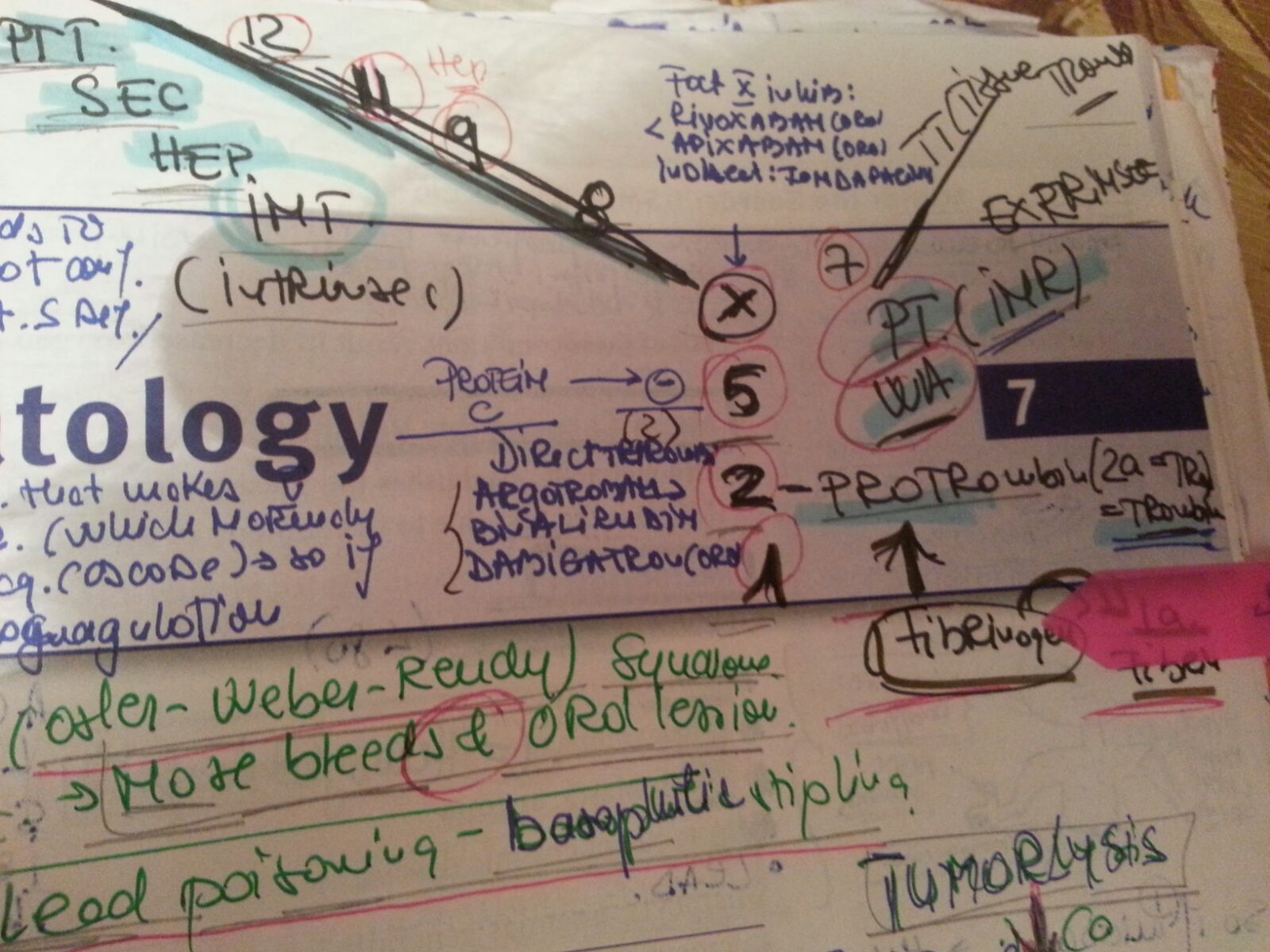
Extrinsic intrinsic pathway coagulation (Easy to memorize)


Secondary causes of Hypertension

Secondary causes of HTN 


1. Renal : Renal Artery Stenosis
2. Adrenal : Primary Hyperaldosteronism , Cushing syndrome , Pheochromocytoma
3. Thyroid : Hyperthyroidism
4. Parathyroid : Hyperparathyroidism .

15 Ocak 2016 Cuma

Torsade de pointes

Drugs list Torsade de pointes :


  • Class 1 Anti-Arrhythmia : Quinidine , Procainamide , Disopyramide
  • Class 3 Anti-Arrhythmia : Sotalol , Ibutilide , dofetilide


  • Combination of Class 1 and Class 3 : Amiadrone


  • Antipsychotic : Haloperidol
  • Antidepressants : TCA 


8 Ocak 2016 Cuma

Skin conditions and important associations


Acanthosis nigricans -- Insulin resistance (Polycystic Ovarian Syndrome), Gastrointestinal malignancy

Multiple skin tags   -- Insulin resistance , Pregnancy and Crohn disease (perianal)

Porphyria cutanea tarda
Cutaneous leukocytoclastic vasculitis (palpable purpura) secondary to cryoglobulinemia, Lichen planus --
Hepatitis C

Dermatitis herpetiformis  -- Celiac disease

Sudden-onset severe psoriasis 
Recurrent herpes zoster 
Disseminated molluscum contagiosum   -- HIV infection

Severe seborrheic dermatitis  -- HIV infection and Parkinson disease

Explosive onset of multiple itchy seborrheic keratosis -- GI malignancy

Pyoderma gangrenosum -- IBD (inflammatory bowel disease)

Vitiligo -- other autoimmune conditions such as Celiac disease, Pernicious anemia , autoimmune thyroid disease, type 1 diabetes mellitus, primary adrenal insufficiency, hypopituitarism, and alopecia areata.

1 Aralık 2015 Salı

Features of constrictive pericarditis


Features of constrictive pericarditis

Etiology 
  • Idiopathic or viral pericarditis
  • Cardiac surgery or radiation therapy
  • Tuberculous pericarditis (in endemic areas)


Clinical presentation

  • Fatigue and dyspnea on exertion
  • Peripheral edema and ascites
  • Increased JVP
  • Pericardial knock may be heard
  • Pulsus paradoxus
  • Kussmaul's sign


Diagnostic findings
  • ECG may be nonspecific or show atrial fibrillation or low voltage QRS complex
  • Imaging shows pericardial thickening and calcification
  • Jugular venous pulse tracing shows prominent x and y decents.

30 Kasım 2015 Pazartesi

Findings of Cor pulmonale

Characteristic findings of Cor pulmonale


Common etiologies :

  • COPD
  • Interstitial lung disease
  • Pulmonary vascular disease (eg, thromboembolic)
  • Obstructive sleep apnea


Symptoms :

  • Dyspnea on exertion, fatigue, lethargy
  • Exertional syncope (due to decreased CO)
  • Exertional angina (due to increased myocardial demand)


Examination : 

  1. Peripheral edema
  2. Increased Jugular venous pressure with prominent a wave
  3. Loud S2
  4. Right sided heave
  5. Pulsatile liver from congestion
  6. Tricuspid regurgitation murmur


Imaging :

  • EKG : partial or complete RBBB , right axis deviation, right ventricular hypertrophy right ventricular enlargement

  • Echocardiogram : Pulmonary hypertension, dilated right ventricle, tricuspid regurgitation


Right heart catheterization: Gold standard for Dx showing right ventricular dysfunction, pulmonary HTN and no left heart disease.

28 Kasım 2015 Cumartesi

Difference between Hydrocele and Varicocele

Hydrocele:--Painless enlargement of the Scrotum.
Can be Unilateral or Bilateral.

Diagnosis with Transillumination. However transillumination cannot confirm the diagnosis because it also may indicate hernia.

Ultrasound can be done to confirm the diagnosis.

Varicocele:-Varicocele is a mass of enlarged veins that develops in the spermatic cord.

A varicocele can develop in one testicle or both, but in about 85% of cases it develops in the left
testicle. The left spermatic vein drains into the renal vein .

Highest in men between the ages of 15 and 25.
The sudden appearance of varicocele in an older man
may indicate a renal tumor blocking the spermatic
vein.

S&S:--Asymptomatic or may have:--

  • Ache in the testicle
  • Feeling of heaviness
  • Infertility
  • Atrophy of the testicle
  • Visible or palpable enlarged vein 


Diagnosis:--Large varicoceles may be seen with the naked eye. Medium-sized varicoceles may be detected during physical examination by palpating--"Bag of Worms

Doppler ultrasonography uses ultrasound echos to detect the characteristic sound of the backflow of
blood through the valve.

Treatment:--Surgical Ligation of the affected Spermatic veins.

Summary :

varicocele is described as a "bag of worms", will not transilluminate
hydrocele is collection of fluid in tunica vaginalis, will feel different depending whether it is communicating or not, will transilluminate

18 Eylül 2015 Cuma

Common Causes of Anion gap metabolic acidosis

Common Causes of Anion gap metabolic acidosis:

1.Lactic acidosis: Hypoxia, poor tissue perfusion, mitochondrial dysfunction

2. Ketoacidosis: Type I diabetes, starvation or alcoholism

3. Methanol ingestion : Formic acid accumulation

4. Ethylene glycol ingestion : Glycolic and oxalic acid accumulation

5. Salicylate poisoning: Causes concomitant respiratory alkalosis

6. Uremia (ESRD): Failure to excrete H+ as NH4+

17 Eylül 2015 Perşembe

Indications for Dialysis

INDICATIONS FOR URGENT DIALYSIS

Remember : 

AEIOU

A Acid base disorders : Acidemia

E Electrolyte disturbance : Hyperkalemia

I Intoxication i.e methanol, ethylene glycol, lithium , salicylates

O Overload of Volume

U Uremia : Pericarditis , encephalopathy

11 Eylül 2015 Cuma

Osler Weber Rendu Syndrome

Osler Weber Rendu Syndrome :

Patients with hereditary telengiectasia can develop pulmonary AVMs associated with hemoptysis and right to left shunt physiology. Also with recurrent nose bleeds and oral lesions.

21 Nisan 2014 Pazartesi

Difference between kawasaki and scarlet fever

Kawasaki disease include: (mucocutaneous lymph node syndrome)


Definition : Kawasaki disease is a vasculitis of medium-sized arteries that affects very young children (usually 12-24 months of age).

cause is unknown

Features:
1. Fever more than 5 days - even after aspirin
2. Bilateral conjunctivitis
3. Lymphadenopathy
4. Cutaneous involvement
1. Oropharyngeal: Erythema of the palatine mucosa, fissured erythematous lips, “strawberry” tongue
2. Peripheral extremities: Edema of hands and feet, erythema of palms and soles, desquamation of the fingertips (periungual)
3. Generalized rash: Polymorphous (usually urticarial) erythematous rash beginning on the extremities and moving to the trunk (centri petal spread)

Complication: Formation of coronary artery aneurysms is the most serious complication of Kawasaki disease.

Scarlet fever : 

Causes : Streptococcus pyogenes (group A streptococci) --Toxigenic

Features:

scarlet rash with Sand paper like texture ,circumoral pallor.


Tonsillar exudates, Spares the palms and soles

Complication: Septic complications

Aspirin helps to reduce fever , Amoxicillin and throat culture

Similarity : ''Strawberry tongue''

19 Aralık 2013 Perşembe

Factors Causing Hyperkalemia and Hypokalemia

Factors Causing Hyperkalemia 

  • Acidosis
  • ACEI
  • Beta-Blockers (Propanolol)
  • Digitalis toxicity 
  • Succinylcholine
  • Renal Failure
  • Mineralocorticoid deficiency (Hypoaldosteronism)
  • Potassium-Sparing Diuretics (Spironolactone,Triamterene,Amiloride)
  • Rhabdomyolysis 


Factors Causing Hypokalemia 

  • Loop and Thiazide Diuretics
  • Osmotic Diuretics
  • Mineralocorticoid (Hyperaldosteronism)
  • Alkalosis
  • Insulin
  • Beta-2 agonists(Albuterol)
  • Eating disorder
  • Diarrhea, Vomiting
  • Laxatives
  • ATN - recovery phase
  • Elderly patients.